
Franchise Territory Strategy: How to Define and Protect Your Markets
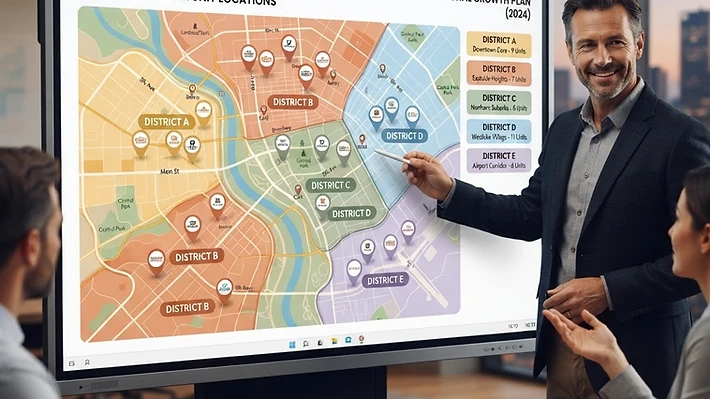
Franchise Territory Strategy: Defining and Protecting Your Markets
Why Territory Strategy Matters
Territory definition is one of the most important decisions you'll make as a franchisor. Too small, and franchisees can't generate enough revenue. Too large, and you're leaving money on the table. Get it wrong, and you'll face cannibalization disputes, franchisee lawsuits, and stalled growth.
Types of Franchise Territories
1. Protected Territories
The franchisee has exclusive rights to operate within a defined area. No other franchisee or company-owned location can open within that territory.
Best for: Service businesses, retail, food — most franchise systems use protected territories.
2. Non-Protected Territories
The franchisee can operate in the area but has no exclusivity. The franchisor can open other locations nearby.
Best for: Very large markets, delivery-based businesses, or franchisors who want maximum density.
3. No Territory
No geographic restrictions at all. Franchisees can operate anywhere.
Best for: Online businesses, mobile services, or franchisees who serve niche markets.
How to Define Territories
Population-Based
The most common approach. Assign territories based on population:
- Urban: 50,000–150,000 people per territory
- Suburban: 75,000–200,000 people per territory
- Rural: 100,000–500,000 people per territory
Radius-Based
Define territories by a radius around the franchise location:
- Urban: 1–3 mile radius
- Suburban: 3–7 mile radius
- Rural: 10–25 mile radius
ZIP Code or County-Based
Use existing geographic boundaries for clear, easy-to-understand territories.
Data-Driven
Use demographic data — household income, traffic patterns, competitor locations — to define optimal territories.
Preventing Cannibalization
Cannibalization — when a new location takes sales from an existing one — is the #1 cause of franchisee disputes. To prevent it:
- Set minimum distances between locations
- Use population thresholds — don't add a new franchisee until the market supports it
- Include encroachment protections in your franchise agreement
- Monitor sales data — if a new location drops existing sales by more than 10%, you have a problem
Territory Mapping Tools
The Territory Manager lets you:
- Define territories by population, radius, or custom boundaries
- Track which territories are sold, available, or reserved
- Prevent overlapping territories
- Generate territory maps for your FDD Item 12
- Plan multi-unit development schedules
Common Territory Mistakes
- Territories too small — Franchisees can't earn enough and leave the system
- Territories too large — You're under-monetizing and franchisees can't service the whole area
- No encroachment protection — Franchisees feel threatened by new locations
- Vague definitions — "The greater metro area" is not a territory. Use specific boundaries.
- No growth plan — You need a roadmap for which territories to sell and when
Multi-Unit and Area Development
For faster growth, consider area development agreements where a single franchisee commits to opening multiple units in a region. This accelerates expansion and creates stronger franchisee partners.
Hashtags
#FranchiseTerritory #TerritoryMapping #FranchiseExpansion #MarketProtection #TerritoryStrategy #FranchiseGrowth #CannibalizationPrevention #AreaDevelopment #FranchiseMarkets #TerritoryDefinition
Endorsement Disclaimer — Results Not Typical
Success stories, case studies, testimonials, and financial growth metrics featured in the Franchise Learning Hub reflect individual experiences and are not typical results. Your results may vary significantly based on your business model, industry, market conditions, effort, capital investment, management skill, and other factors. These endorsements are provided for educational and illustrative purposes only and do not constitute a guarantee, promise, or representation of future results or earnings.
Some contributors featured in the Learning Hub may have received compensation, complimentary services, or other benefits in exchange for their testimonials or case studies, in accordance with the FTC Endorsement Guides (16 CFR Part 255). Any material connection between an endorser and Franchise Builder US is disclosed alongside the endorsement. Franchise Builder US is not responsible for the accuracy of third-party endorsements and encourages prospective franchisees to independently verify all claims before making investment decisions.